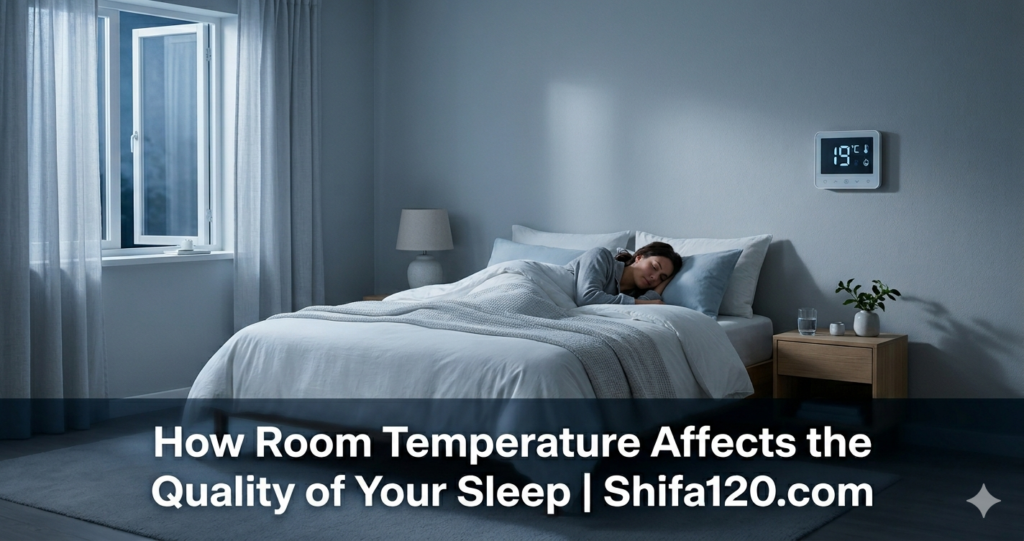
Most people adjust their pillow, change their mattress, and try every sleep supplement available — but never think about the temperature of the room they are sleeping in.
Room temperature is one of the most powerful and most overlooked factors in sleep quality. Get it wrong and your body will struggle to reach the deep, restorative sleep stages it needs — regardless of how many hours you spend in bed.
Why Temperature Matters for Sleep
Your body needs to lower its core temperature to initiate and maintain deep sleep. This is not optional — it is a biological requirement. Your core body temperature naturally begins to drop in the evening as part of your circadian rhythm, signalling to your brain that sleep time is approaching.
When your sleeping environment is too warm, your body cannot complete this cooling process efficiently. The result is lighter sleep, more frequent waking, reduced deep sleep, and reduced REM sleep — even if you feel like you slept a full night.
When your environment is too cold, your body diverts energy to maintaining warmth rather than repair and restoration. Sleep becomes fragmented and uncomfortable.
The temperature of your room either supports or fights against your body’s natural sleep process. There is no neutral position.
The Optimal Sleep Temperature
Research consistently identifies the same optimal range:
18°C to 20°C (64°F to 68°F)
This is the range in which most adults initiate sleep fastest, spend the most time in deep sleep, and wake feeling most restored. Individual variation exists — some people sleep better slightly warmer or cooler — but this range is the starting point for most adults.
Children and older adults typically benefit from a slightly warmer room — 20°C to 22°C — as their temperature regulation is less efficient.
What Happens When Your Room Is Too Warm
A room above 24°C significantly disrupts sleep architecture.
Your body struggles to lower its core temperature. You stay in lighter sleep stages longer. Deep sleep is reduced — the stage where physical recovery, immune repair, and cellular restoration happen. REM sleep is disrupted — affecting memory, emotional processing, and mental clarity the next day.
You may not fully wake up, but your sleep is fragmented at a level your body registers. The result is waking up feeling unrested despite spending adequate time in bed.
In Gulf climates where outdoor temperatures exceed 40°C and air conditioning is essential — the most common mistake is setting the AC too high at night to save electricity. The cost of poor sleep quality is far higher than the electricity saving.
What Happens When Your Room Is Too Cold
A room below 16°C creates a different problem. Your body activates its cold response — muscles tense, metabolism increases to generate heat, and the nervous system becomes more alert. This is the opposite of the relaxed, low-arousal state that deep sleep requires.
Cold feet specifically are associated with difficulty falling asleep. The body’s ability to lose heat through the hands and feet is part of the natural sleep temperature regulation process. Wearing socks in a cold room can actually help initiate sleep by supporting peripheral heat loss.
Practical Steps to Optimise Your Sleep Temperature
Set your AC or fan to 18°C to 20°C before sleep. Do not wait until you are already in bed — cool the room 30 minutes before your target sleep time so the environment is ready when you lie down.
Use breathable bedding. Cotton and linen regulate temperature better than synthetic materials. Heavy duvets in warm climates trap heat and raise your skin temperature through the night.
Take a warm shower 60 to 90 minutes before bed. This sounds counterintuitive but it works. A warm shower raises your skin temperature temporarily — when you step out, your body cools rapidly. This accelerated cooling mimics and supports the natural temperature drop that signals sleep onset.
Keep your feet warm if the room is cool. Wearing light socks helps the body regulate peripheral temperature and can shorten the time it takes to fall asleep.
Avoid heavy exercise within 2 hours of sleep. Intense exercise raises core body temperature significantly. It takes 2 hours or more for this elevation to fully subside — exercising too close to bedtime delays the cooling process your body needs to initiate sleep.
The Shifa120 Principle
Small environmental adjustments — made consistently — compound into significant improvements in sleep quality over time.
Adjusting your room temperature costs nothing. It requires no supplements, no devices, and no major lifestyle change. It simply requires awareness and a small daily habit — setting the right temperature before you sleep.
Do it tonight. Do it every night for 30 days. Notice the difference in how you wake up.
That is the Shifa120 approach. Small. Consistent. Transformative over time.
This post is part of the Shifa120 wellness transformation programme. Learn more at shifa120.com.